In June 1838, a troupe of devadasi dancers from the Perumal Temple in Tiruvendipuram, in the former French Indian colony of Pondicherry, arrived in France for an eighteen-month tour of northern Europe: four adult females and a six-year-old girl, accompanied by three male musicians.1 They were rapturously received in their first port of call, Bordeaux, and anxiously awaited in Paris and London. This is in many respects the first instance of a troupe of dancers brought from afar by an entrepreneur and actively advertised to a local/foreign public, with expectations whipped up in the press in advance of their arrival and echoes of their visit lingering long thereafter.2 The devadasi dancers were brought to Europe by French impresario EC Tardivel, who oversaw the Bordeaux and Paris legs of their visit; he organized for them to perform not only for the general public but for a royal audience, inviting artists and writers to visit them in their accommodations, and stoking the press frenzy—both French and British—with reports of their daily activities, eating and sleeping habits, etc. Théophile Gautier wrote about them; Eugène Delacroix painted them; Jean-Auguste Barre sculpted them; Gérard de Nerval perceived in them a potential renewal of Western dance forms.3 Nor were European dancers immune to their power: Elssler and Taglioni both declared themselves moved and inspired by the devadasis, going on to incorporate undulating arm movements into their own gestural repertoire.4 The ripple effect of their visit to France was both immediate and long-lasting, and intriguingly, it stretched over into a different kind of reception in Britain, which will help us to understand the questions opened up by the arrival of these dancers with a style that was distinctly, and distinctively, unfamiliar for Western audiences.
The Pondicherry dancers gave a series of public and private performances in Bordeaux and then Paris before arriving in Britain in late October, where they settled into a two-month run at the Adelphi Theater. As Molly Engelhardt carefully details (525), the program performed in France had been close to the Bharatanatyam sequence as it would have been practiced in India. In England, conversely, the troupe performed a curated series of dances within an Orientalist frame dreamt up by their manager, impresario Frederick Yates. In one instance, in other words, their dance invoked the aura of its usual setting in religious ritual; in the other, it was hemmed in by art and artifice. Far from disappearing in London, however, the ethnographic dimension was siphoned off as a separate attraction. For while performing at the Adelphi, the dancers also appeared twice daily at the Egyptian Hall in Piccadilly St, an exhibition space commissioned by explorer William Bullock to house specimens brought back from overseas: usually works of art (and plaster-casts of archaeological sites) but occasionally also human beings, such as the Laplanders installed as a living diorama in front of a painted backdrop in 1822.5 The fact of the devadasi performances at two quite distinct sites –theater and museum—hints at the shifting place of dance in the period: conceived as a window onto an unfamiliar culture or as an artistic condensation of that culture. A hybrid, in other words, of art and ethnography, flickering quite flexibly between these two poles, and allowing the dancers to be presented and conceived now as artists, now as ethnographic subjects.
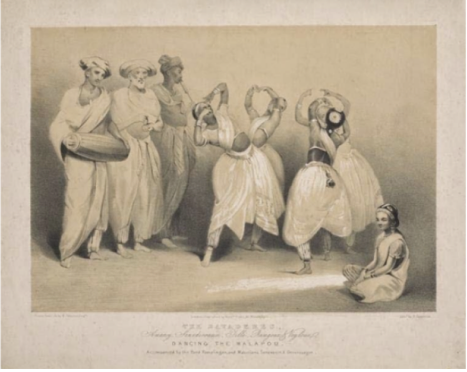
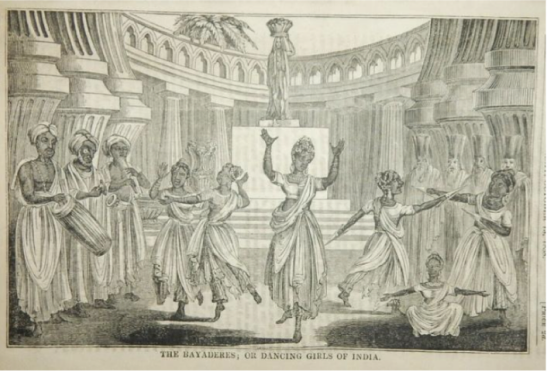
This is borne out by accounts of what publics themselves encountered and valued as they watched the Pondicherry dancers at the theater and met with them at the museum.6 On the one hand, audiences were thrilled by the possibility of in-person meetings with real Indian dancers, by the chance of comparing them to the ballerina-bayadères they had seen on stage, not to mention the figures they had read about in the accounts of dancing girls that abounded in Orientalist fantasies of the time. At the same time, they voiced the difficulties they encountered in reading the dancers’ gestural repertoires, going so far as to request keys to the codes of head, eye, hand and finger movements, insisting that the dances both required and deserved translation (Engelhardt, 524).7 The devadasi dancers were understood to be presenting art, yet their movements were felt to be in need of ethnographic explanation, with the lingering sense that their art’s grounding in culturally unfamiliar ritual necessarily held it at a remove from Western understanding, requiring the mediation of interpretative tools.8
A similar logic continued to undergird the presentation of dance half a century later, in the international marketplaces par excellence that were the world’s fairs. Much attention has been paid to the ways in which nations staged their participation in modernity by putting on display their technological but also their cultural products. In the competition to stand out, a marked degree of self-exoticization frequently came into play, as Timothy Mitchell noted in his ground-breaking analysis of the “rue de Caïre” exhibit at the 1889 fair, which –as noted above—employed moving bodies to authenticate and animate the buildings and streets depicted in Egypt’s exhibition space.9
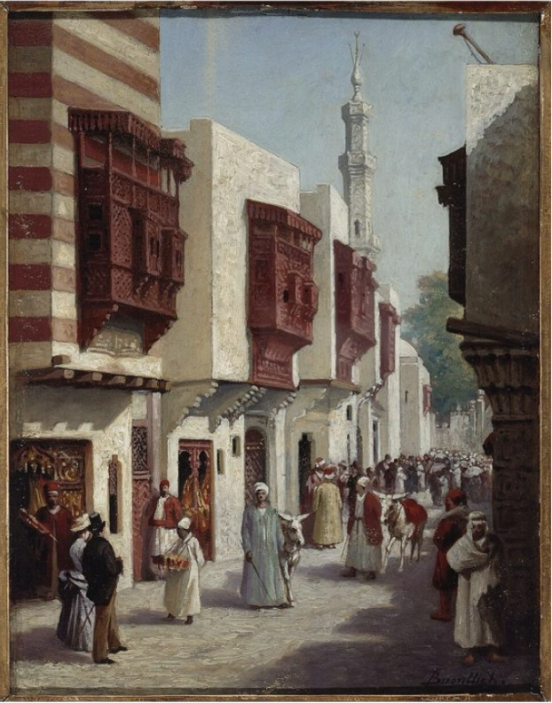
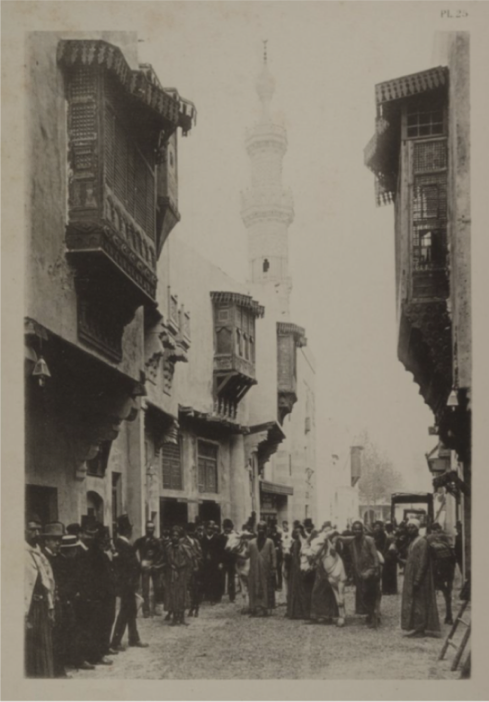
But in instances where nations also put on display their cultural artefacts, something like a flipped version of Mitchell’s logic took place. When performance practices (music, dance, theater, and ritual) were being highlighted, specially-designed artificial environments were created to heighten the sense of authenticity of the spectacle. In other words, it was less a question of bringing in real bodies to authenticate the setting, than of creating simulated settings to augment the reality of the performing bodies. Annegret Fauser’s study of the 1889 world’s fair in Paris offers a wealth of details about such spaces. As she recounts, Javanese dancers performed in a café-theater serving local delicacies (albeit of imperial origin) such as hot chocolate and beer inside the confines of a Javanese village, while Vietnamese dancers were showcased in an even larger theater whose interior was imported from Saigon; both nations played upon the sensoria of their visitors, enticing them into unfamiliar spaces to appreciate unfamiliar performance styles with the help of music and aromas wafting through the carefully orchestrated entrance areas.10 The point of the cultural offerings at the world’s fairs was to offer the illusion of “authentic” encounters with the artistry of other cultures, as Fauser puts it (5), and this was accomplished by appealing not only to the visitor’s vision, but to other senses as well, offering the experience –entertainment and education combined—of immersion by throwing performers and public together in a space of intimate encounter.11
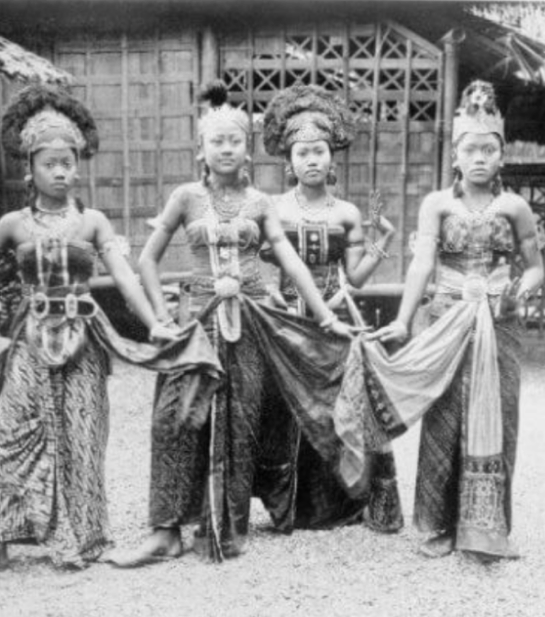
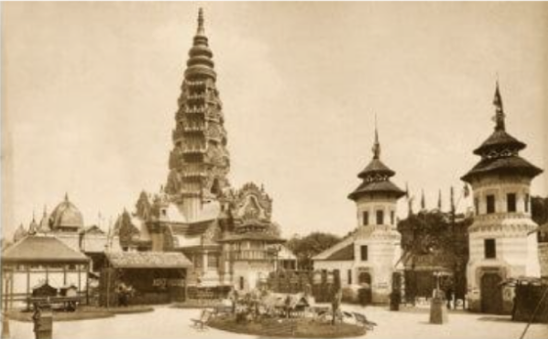
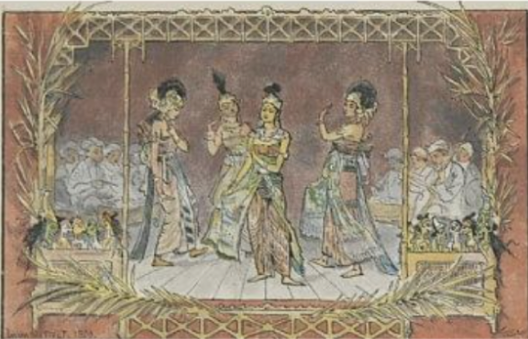
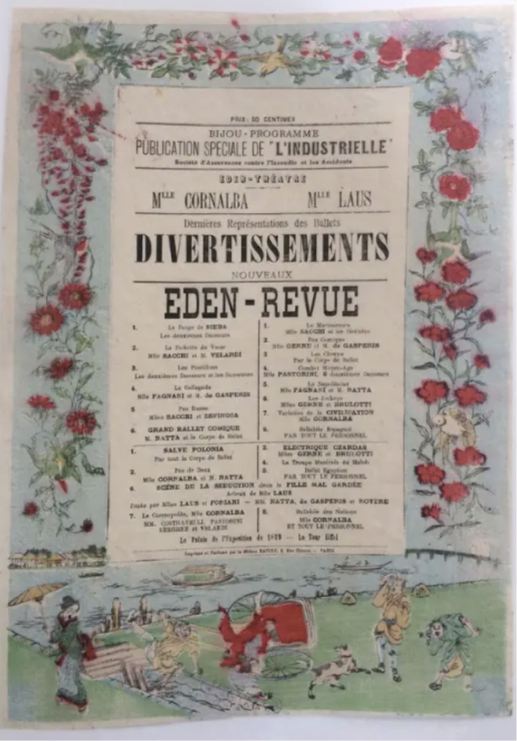
The dances presented at the world’s fairs were objects held up for a public’s delectation, in ersatz settings that were not so much ethnographic environments as theatrical backdrops; while they hinted at authenticity, the public almost certainly understood this to be a fiction, framed for them by the very machinery of exhibition.12 As an array of film and cultural theorists have shown, spectacle in the late nineteenth century relied on and played with the mass public’s willingness to hold belief and disbelief in tension; or as Spanish author Emilia Pardo Bazán put it of the 1900 fair, nicely nailing the illusiveness of the performances, “Let us believe in the authenticity of much of the exotic element”.13 The dancers may have been real, but the spectacle was not; or rather, it corresponded to the reality of the spectacle, a spectacle drawn more from variety theaters and forms of popular entertainment than from practices of study and ethnographic immersion.This was a semblance of everyday life, with added artistry (and eroticism), and it would undoubtedly have been taken as such by visitors, aware that they were entering a space of representation. 14
At the same time, it was clearly the savor of authenticity, even when understood to be a fiction, that led to the enormous enthusiasm for dancers in general at the fairs around the turn of the century: at the 1889 and 1900 Universal Exhibitions in Paris, the 1893 Columbian Exposition in Chicago, and the 1904 Louisiana Purchase Exposition in St Louis, all of which saw audiences flocking to see moving bodies. A highlight of all four were Middle Eastern belly dancers, first praised as part of the Egyptian exhibit in the 1889 Paris fair, where they performed in a café hidden behind the façade of a mosque, religiosity entangled with eroticism.15 Here they were spotted by visiting American entrepreneur Sol Bloom; when he was subsequently invited to stage a series of entertainments on the Midway Plaisance in Chicago for the World’s Columbian Exposition of 1893, his mind went immediately to the belly dancers. The Chicago version therefore featured a similar conglomeration of traders and dancers, drawn largely from Algeria, Egypt, and Tunisia, as well as the former Ottoman empire.16
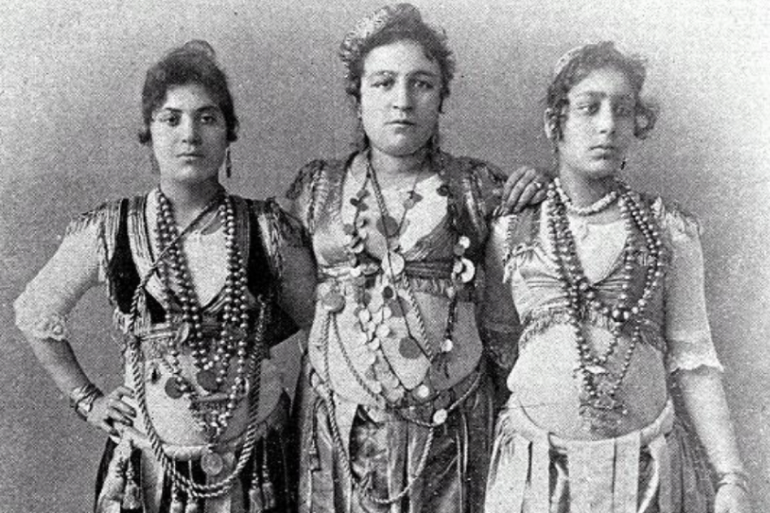
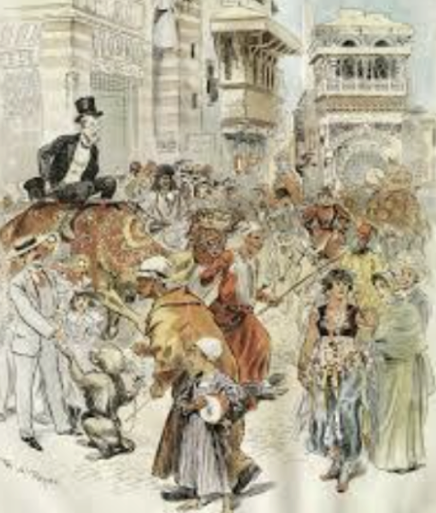
Another draw in the 1889 and 1900 exhibitions in Paris were Spanish dancers imported from Sevilla and Granada; Meira Goldberg notes that a particular admirer of theirs was the Shah of Persia (170-72), who compared them to Egyptian almeh dancers. This connection hints at the association between these two forms of dance exoticism in the minds of the public – an association that by the late nineteenth century had been percolating for several decades. Spanish dancers had been pouring onto the stages of Europe since the 1830s and 40s, part of a burgeoning vogue for all things Spanish after the 1853 marriage of Napoleon III to Eugénie de Montijo. Initially, those performing Spanish dance were not themselves Spanish nationals; we might point to Fanny Elssler’s already-mentioned 1836 “cachucha”, as well as the notorious example of Lola Montez, an Irishwoman born under the name Eliza Gilbert, who studied Spanish dance in Paris, reputedly visited Cádiz and Sevilla in 1842, and debuted on the London stage under her Spanish pseudonym in 1843.
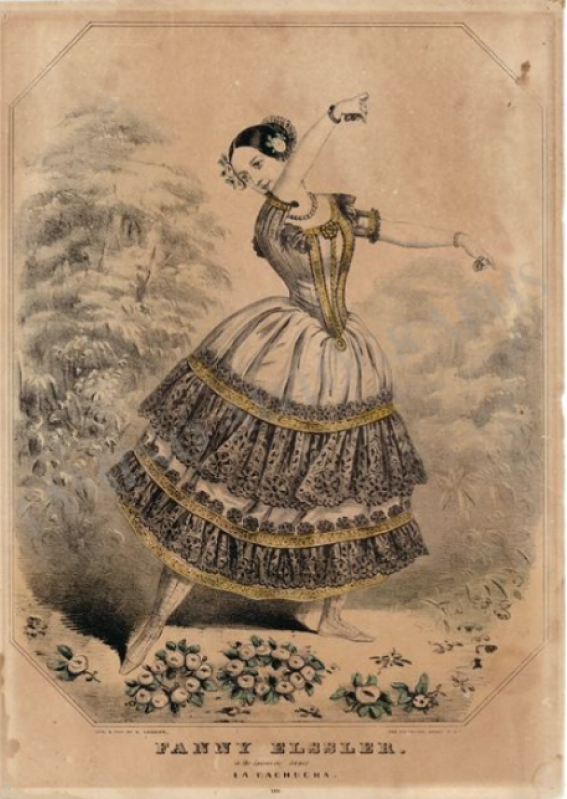
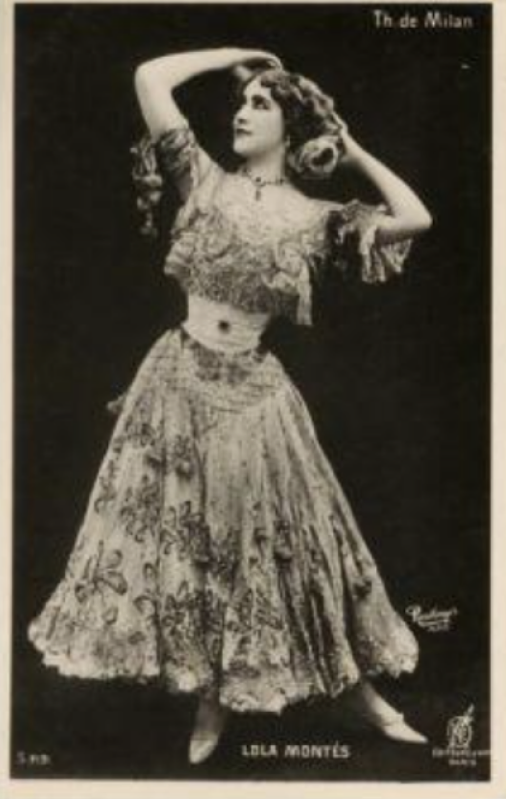
As Gerhard Steingress details, however, the fake Spaniards proliferating in French theaters were soon elbowed aside by a surge in “real” Spaniards performing across the stages of northern Europe.17 Imported at first from Madrid’s Teatro Real, and increasingly from the south of Spain –a region treated as a repository of exotic types and styles by madrileños and Parisians alike—they at first performed escuela bolera (a Hispanicized version of classical ballet) but gradually evolved toward the form we know today as flamenco. Indeed Steingress claims that flamenco emerges precisely from the interchanges resulting from these travels: that rather than developing within closed social circuits in Andalucía, it grew at least in part out of the interplay between Spain’s escuela bolera and the audiences it encountered on its travels through France, England, Italy, and Russia, all of which left their imprint on the evolving forms of Spanish dance – a question we will explore in more detail in the next chapter.
As foreign dance styles encountered one another on the stages and in the exhibition spaces of the West, they began to borrow from one another’s gestural repertoires, finding commonalities of movement that were also noticed by the public. The coincidence of bayadère and “Spanish” dancers in Paris in the late 1830s and through the 1840s, for instance, led to what Steingress calls a “bayaderización de la cachucha española”, a blending of modes which saw Indian arm and foot movements borrowed and collaged into Spanish movement practices. By the end of the century, the association between Spanish and Eastern modes had become still more fixed in the minds of the public, helped along by the nascent forms of cinema. Both styles had evident appeal for early film, with their wheeling movements on the spot, frontally-focused while turning on their axes, making extensive use of a compressed space in a manner easily adaptable to the camera, featuring impressive back- and side-bends, circular arm movements, and staccato footwork. And indeed several early Edison films of dancers train the eye equally on Spanish dancers and belly dancers: Carmencita was captured on film by Edison in 1894, performing a music hall routine she had perfected in New York;18 an 1898 film has Ella Lola performing a Turkish dance in the enclosed set of Edison’s Black Maria.
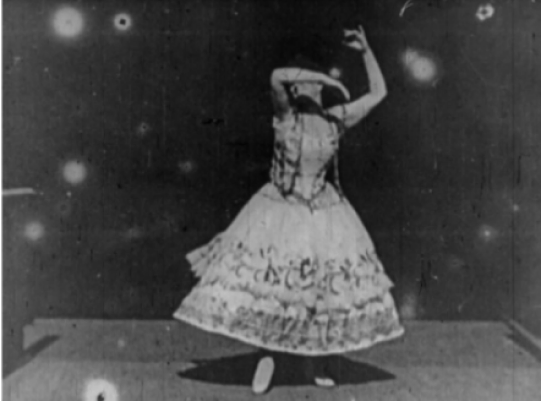
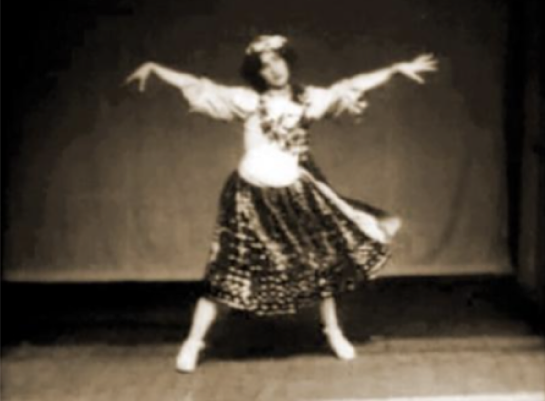
Another form of dance featured prominently in several early films is Indigenous dance. Some of the very first Edison films of 1894 show performances by members of a Sioux tribe –borrowed from Buffalo Bill’s Wild West Show—surprisingly numerous in the compressed space of the Black Maria.19 Just a year later, German art historian Aby Warburg, on a visit to the American Southwest in 1895-96, took photographs of Pueblo Indian rituals that were left unpublished in his lifetime, but that informed his growing interest in putting together an “Atlas” of the gestures of humanity: what he referred to as its “pathos formulae”. In an unpublished lecture he delivered in 1923 while interned in a psychiatric hospital, 20 he connected the gestures found in these photographs to images in the repertory of ancient Greece and medieval Christendom. 21
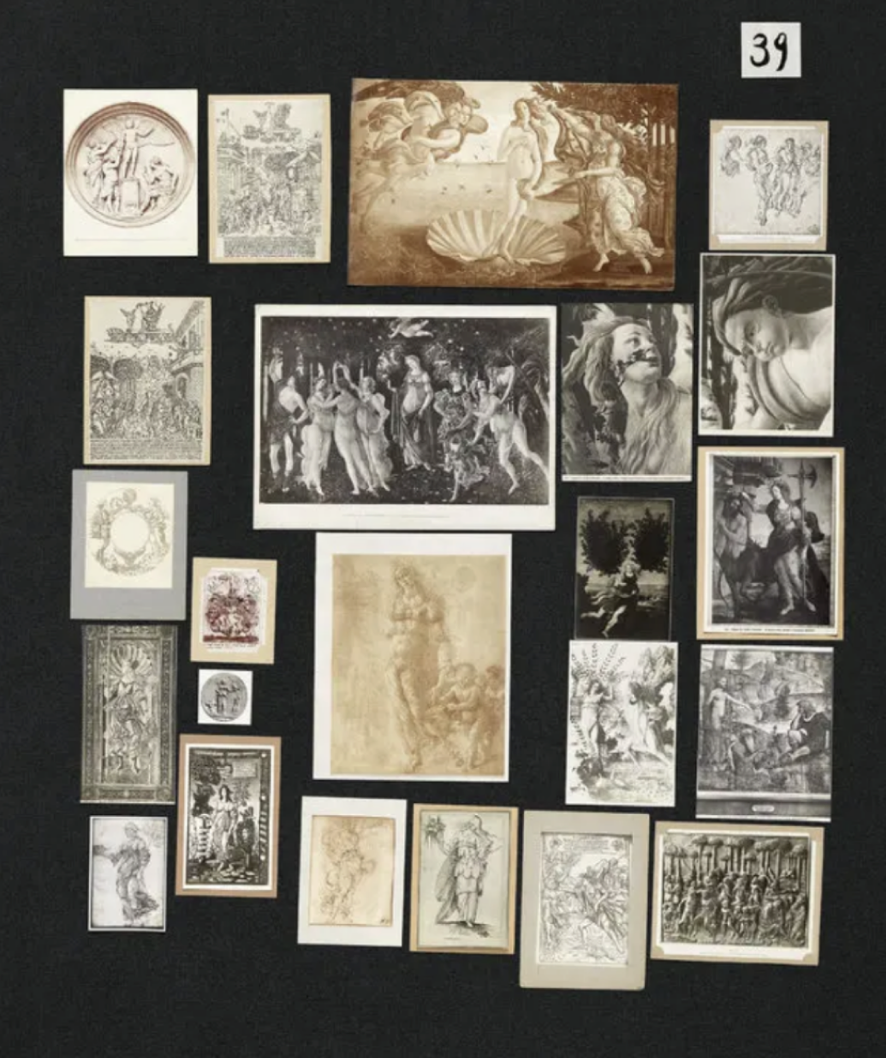
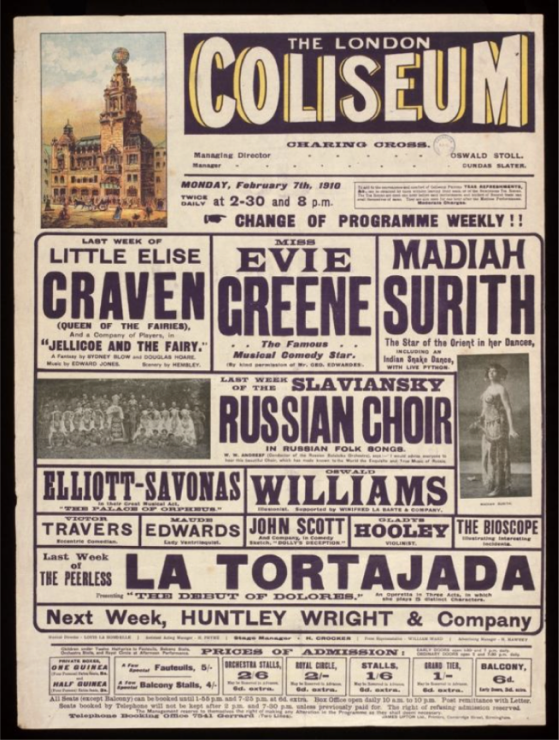
Warburg’s determination to connect gestures across a temporal and spatial span –to provide a global atlas of gesture, hinting at shared embodied formulae for feeling and expressing emotion across historical and regional difference—is an extraordinary effort at piecing together the shards of a culture scattered across time and space, and as we will see, it will have an analog in the global histories of dance that began to proliferate in the 1920s. It also connects with the fact that a broad spectrum of audiences –in museums, world’s fairs, cinemas, and music-halls—were learning to consume culture through the fragment, stringing those fragments together to compose worldviews. The impulse was partly ethnographic, but it also attests to the entertainment appeal of the spectacle of moving bodies, especially when those bodies represented (either in truth or in fiction) a tantalizing elsewhere. It is time now to broaden our viewfinder and see where else foreign dances and dancers were being showcased in the mid-to-late nineteenth century, to see the abundance of entertainment venues that made room for dance in spectacles of variety, and that traded in forms that limned the friction between the authentic and the inauthentic, delighting in the ambiguity and the alternation. Whatever could reach and retain a public across the short attention span of the music-hall, wild west show, vaudeville theater, even the circus, was deemed worthy of being showcased.