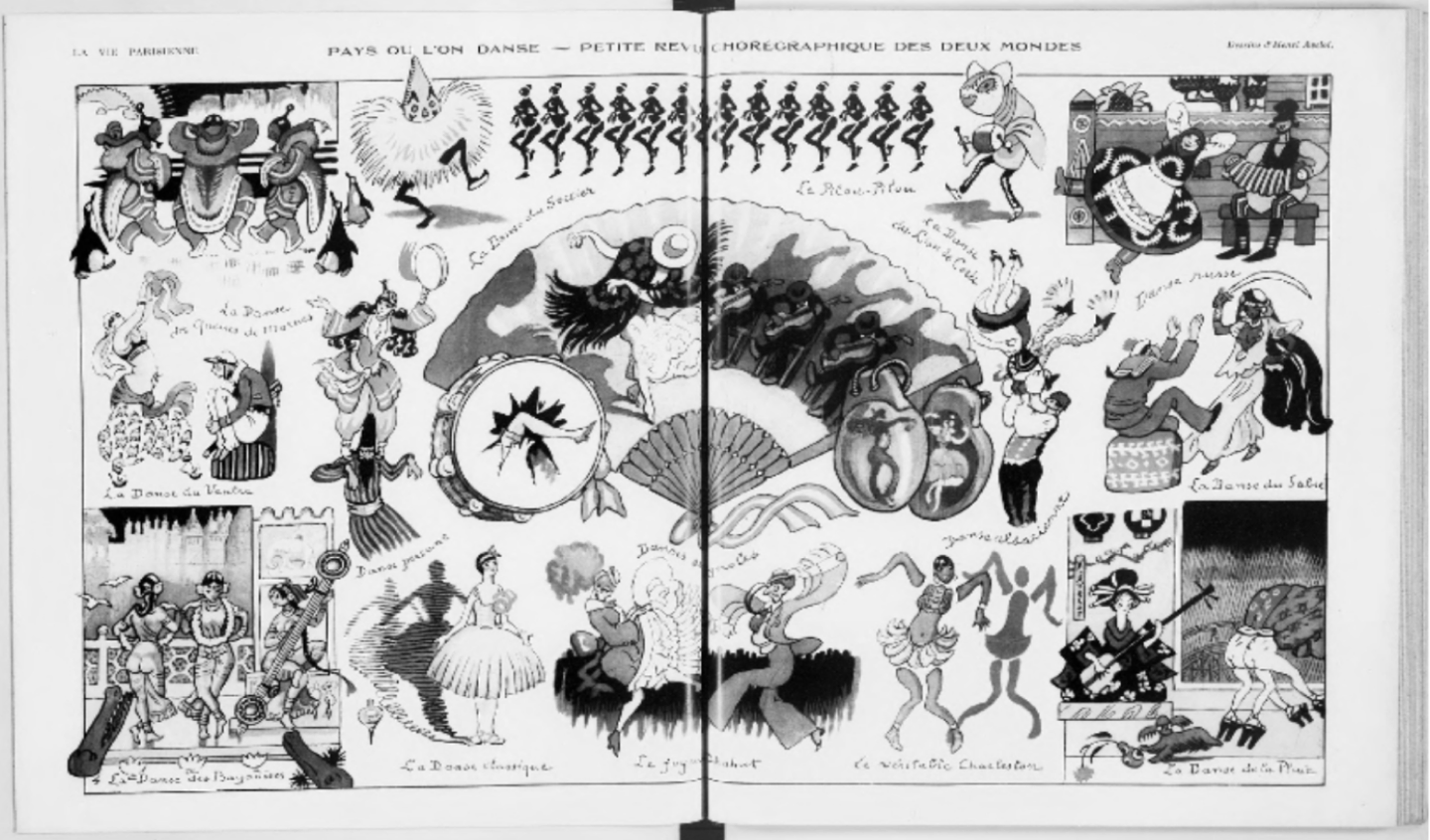
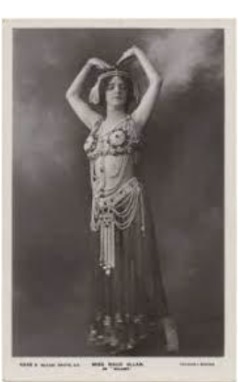
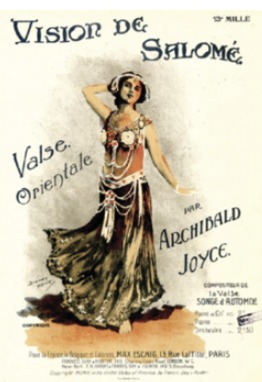
This logic is emblematized in the closing tableau of Lepine’s Tour du monde, in which all of the dancers who had appeared in its daisy-chained spaces are brought together around an actual globe, underlining to the spectator that they have just been taken on a tour of the world, whose stops have in each case been “authenticated” by each place’s particular moving bodies. These bodies, despite being ostensibly tied to their locations, are here improbably brought together in the non-space of the film’s allegorical apotheosis, in which the dances of the world are gathered together to create a moving emblem of the cultures of the world, as well as to offer themselves up for comparison. This is a fitting image for this chapter, in which we will explore how dance becomes bound up with global imaginaries in what Heidegger famously called “the age of the world picture”. We will see dancers putting together eclectic repertoires comprising various forms of exotic, classical, and modern dance, turning themselves effectively into portable world’s fairs; we will encounter critics responding to those spectacles, writing comparative histories of world dance, drawing genealogies and connections across the intensely variegated panorama of modern dance in the early decades of the twentieth century; and we will start to trace the responses of a wide variety of publics to this work across a broad geographical horizon, responses inflected by questions of region, language, mobility, and class. Against this moving backdrop, we will explore the changing place of dance, its development from a “divertissement” to a serious art form and indeed vehicle of exploration in the passage between two centuries, fluctuating in the process between two poles: the ethnographic and the artistic, present in differing and oscillating degrees in the cases we will encounter.7
Dancers putting together eclectic repertoires, turning themselves effectively into portable world’s fairs.
Michelle Clayton
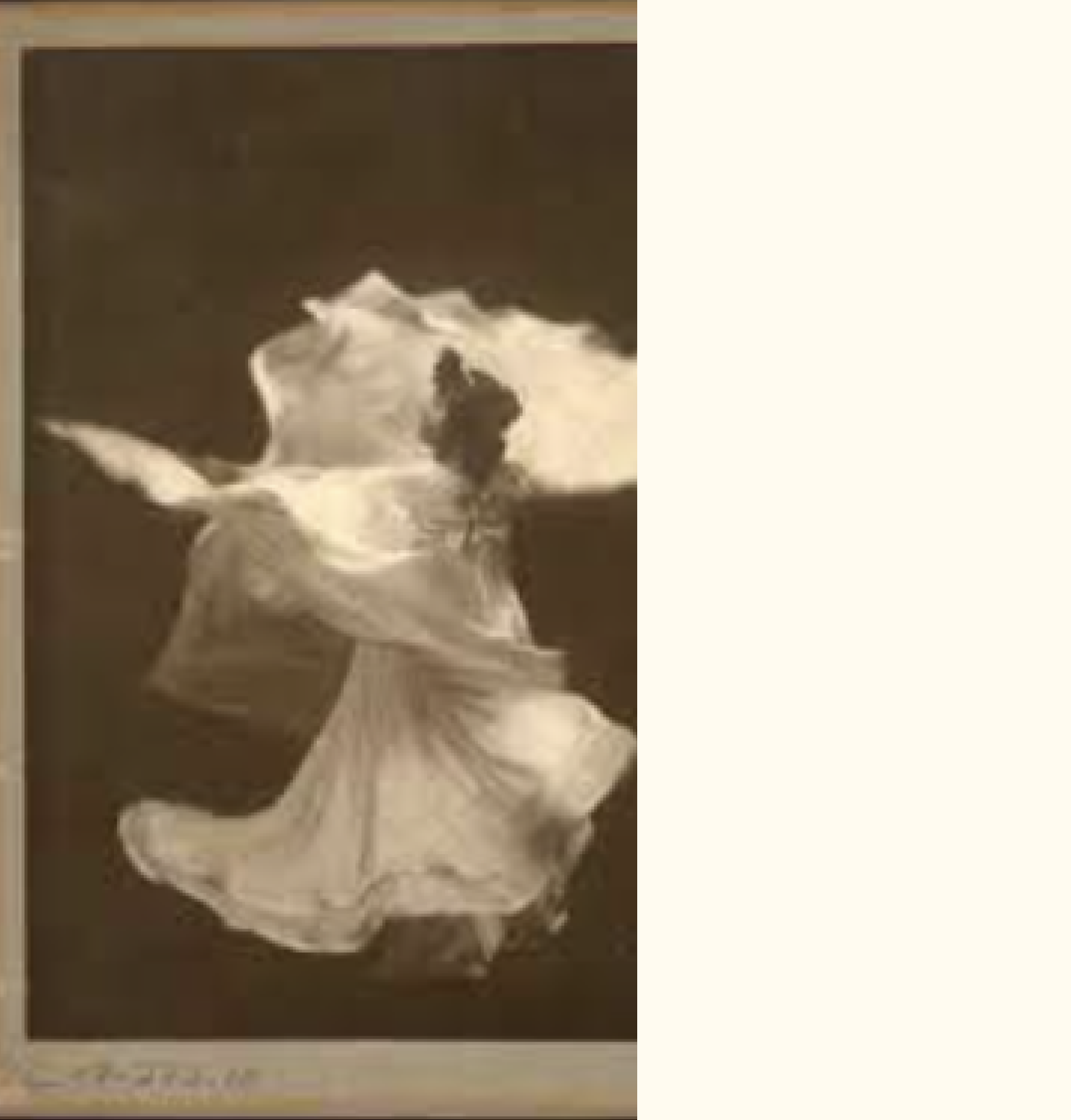
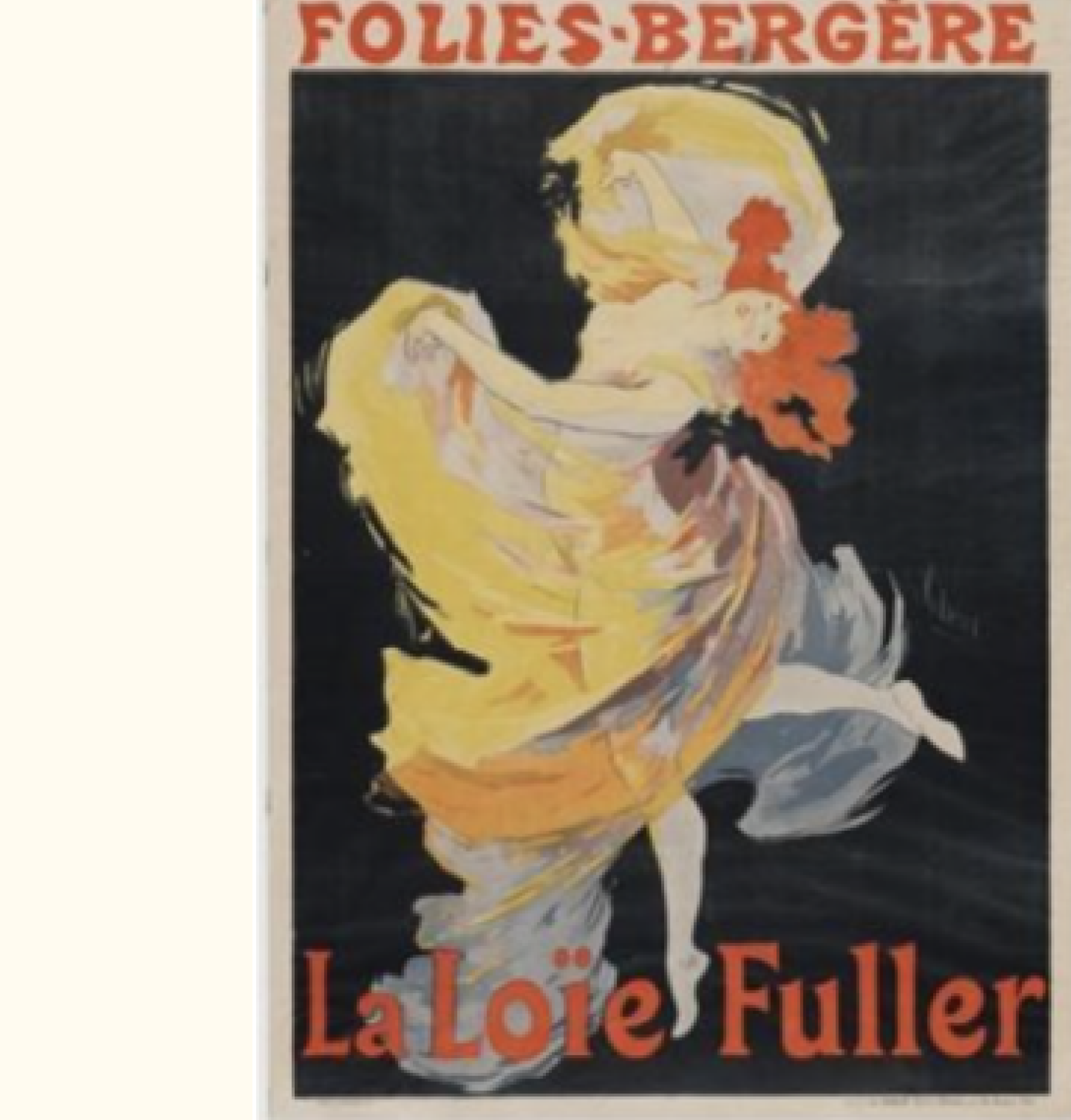
The pairing of photograph and poster restates the chapter’s central tension in miniature: the same dance circulates simultaneously as document and as advertisement, as ethnographic record and as spectacle for sale.